home / what would my backrooms look like? / backrooms kitchen
the heart of the home, emptied
Backrooms kitchen
A backrooms kitchen is the warmest, most-peopled room of a home rebuilt with everyone subtracted: the same oak cabinets, the same linoleum, the same window over the sink, but now silent, fluorescent-cold, and very slightly wrong. liminals.space takes your own photos of one kitchen and reconstructs it in that liminal-space aesthetic, graded onto worn VHS tape, so it reads as the place you grew up eating breakfast and as somewhere you'd be afraid to walk into at the same time. You upload exactly 2 photos, two angles of the room, and you don't make an account. Your photos go straight to the generator and are deleted after processing, never stored and never shown to anyone. It costs $4.99, one time, and you get both the everyday room and its backrooms version back as a downloadable keepsake. The result is specific to your kitchen, not a stock room: your layout, your cabinet run, your light.
2 photos · $4.99 · no account · your photos aren't saved.
a 1990s family kitchen → the backrooms
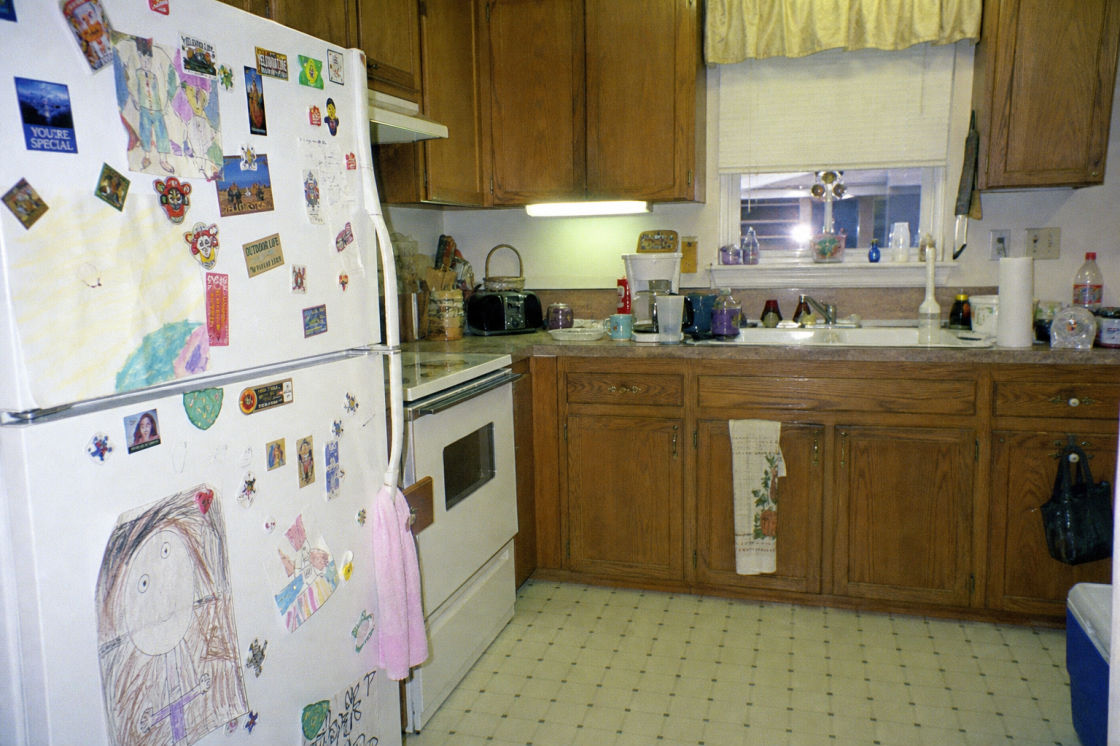
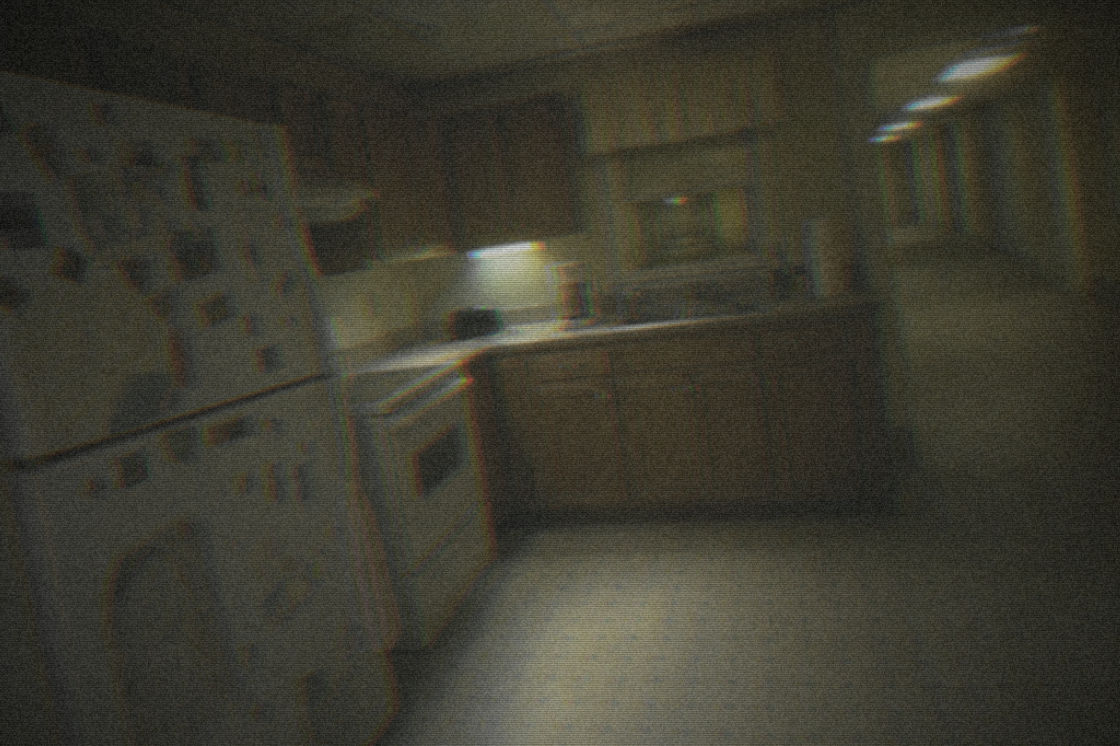
The pair above is a real example from our own engine, not a customer photo.
Why the kitchen lands harder than a hallway
Most backrooms images trade on rooms that were always a little impersonal: an office floor, a parking structure, a corridor that belonged to no one. The kitchen is the opposite. It was the room that was never empty. Someone was always passing through it, leaning on the counter, opening the fridge for no reason. It is where the day started and where it ended. So when you see it stripped of all that, the absence has weight the way an empty hallway never could. You are not looking at a strange place. You are looking at the most familiar place there is, with the one thing that made it warm taken out.
That is the whole tension of a backrooms kitchen. The cabinets are still oak. The light still comes through the window over the sink at the angle it always did. But the chairs are pushed in too neatly, the counter is too clear, and the fridge is humming to no one. It is recognisably the kitchen you grew up in, and it is unmistakably abandoned, and your brain refuses to hold both at once.
What the rebuild holds onto
The cabinets and the counter
A kitchen's identity lives in its surfaces. The honey colour of oak doors, the grout lines in the backsplash, the worn edge of a laminate counter where elbows leaned for twenty years. The rebuild reads those textures from your photos and keeps them, because a kitchen with generic cabinets is nobody's kitchen. The cupboards in your backrooms image are the same ones you reached into as a child, just dimmer and quieter.
The window over the sink
Nearly every kitchen has one: the window above the sink that looked onto the yard, the driveway, the neighbour's fence. It is where someone stood washing up while the rest of the house carried on behind them. The rebuild preserves where the light enters and how it falls across the floor, so the room feels like yours at a particular dim hour, late afternoon going grey, rather than a room lit from nowhere.
The hum nobody is listening to
You can't render sound, but you can render the things that made it. The fridge in the corner, the under-cabinet fluorescent strip, the kettle by the wall. A real kitchen is never truly silent, and the eerie part of the backrooms version is that all the machines are still there, still on, still humming, and the table where the family ate is the only thing in frame that has nothing to do.
How to do it: four steps
- Gather your photos. You need exactly 2, and people-free shots work best. Pick two angles that hold the most: the wide view from the doorway that takes in the cabinet run, the floor, and the table, and a closer one of the window over the sink or a surface detail. Scanned old photos from a family album work if the kitchen is long gone.
- Upload to liminals.space. No account needed. Your photos go straight to the generator and are deleted once your images are made. They're never stored or seen by anyone else.
- Pay once: $4.99. Look at the before and after example on this page first, then a single flat payment ($4.99 one-time, handled by Polar) starts the generation. No subscription, no upsell.
- Get both rooms back. We generate the everyday kitchen and its backrooms version at full resolution, graded onto worn VHS tape, and deliver a downloadable keepsake: the full set as images plus a PDF in one zip.
2 photos · $4.99 · no account · your photos aren't saved.
Other rooms worth rebuilding
The kitchen is the warmest one to empty. The rooms around it carry their own quieter weight.
Frequently asked questions
- Why does an empty kitchen feel more unsettling than other rooms?
- Because the kitchen is supposed to be the most crowded, warmest room in a home. Your brain stored it full of motion and sound: the fridge hum, the kettle, someone at the stove. Strip all of that out and leave only the oak cabinets and the cold light over the sink, and the absence has a shape. It feels wrong precisely because you know how full it used to be.
- What photos should I use for a backrooms kitchen?
- People-free shots work best. You upload exactly 2 photos, so pick the two angles that hold the most: the wide view from the doorway taking in the cabinet run, the floor, and the table, and a closer one of the window over the sink or a surface detail. If your childhood kitchen no longer exists, scans of old family photos taken in that room work too.
- Will it keep the specific details of my kitchen?
- Yes. liminals.space reads anchors from your photos rather than inventing a generic room, so your cabinet wood, the linoleum pattern, the window placement, and the worn surfaces carry through. The rebuilt kitchen stays recognisably yours, which is exactly what makes it land instead of looking like a stock liminal hallway.
- Are the before and after images on this page real customer kitchens?
- No. The before and after pair shown here is a real example from our own engine, not a customer's photos. liminals.space never stores or displays anyone's uploads. Your own photos are processed once to make your images and then deleted.
keep reading
Why liminal spaces feel nostalgic · What are the backrooms? · Before / after examples · FAQ