home / what would my backrooms look like? / backrooms basement
the room under the house
Backrooms basement
A backrooms basement is the room under your house, emptied and turned wrong: the same low ceiling and exposed joists, the same furnace hum and single bare bulb, but stripped of every box and every reason to be down there. liminals.space takes your own photos of your basement and rebuilds it as that scene, graded onto worn VHS tape so it reads like a frame your memory recorded badly. You upload exactly 2 photos of one basement, two angles of the same room, pay $4.99 once, and we generate the rooms at full resolution and hand back a downloadable keepsake. No account. Your photos are never stored: they go straight to the generator and are deleted after processing, seen by no one. It is not a stock basement and not someone else's; it is the specific underground room your body already remembers being a little scared of, returned to you empty.
2 photos · $4.99 · no account · your photos aren't saved.
basement → the backrooms
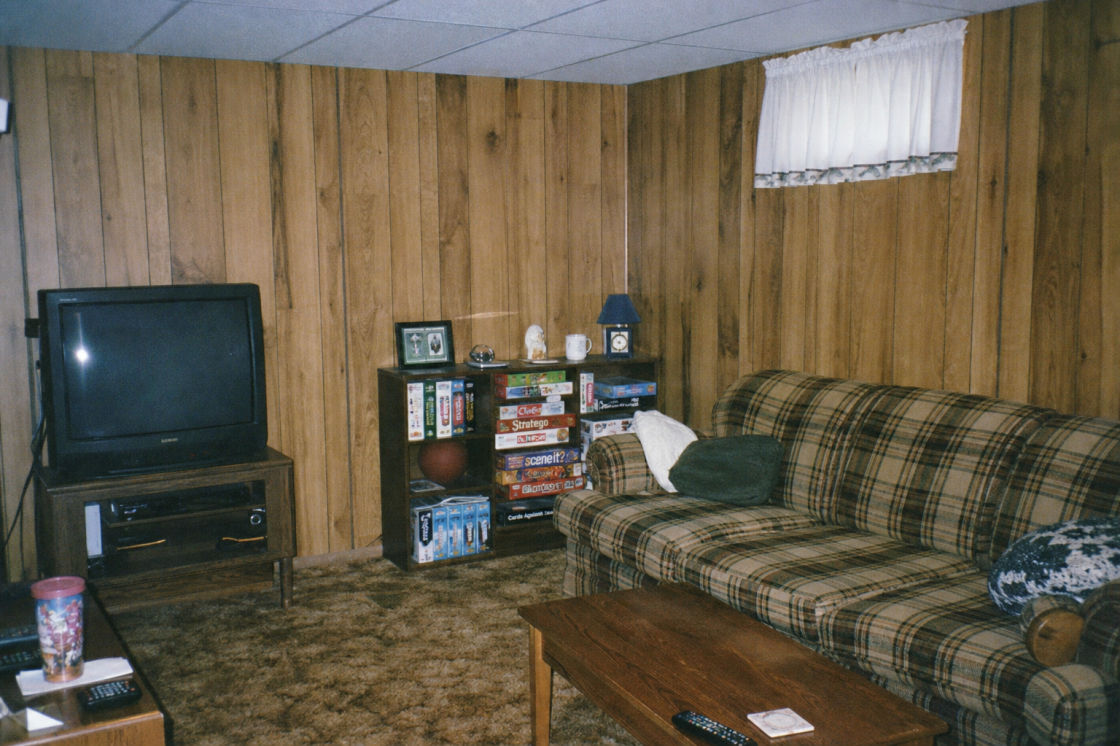
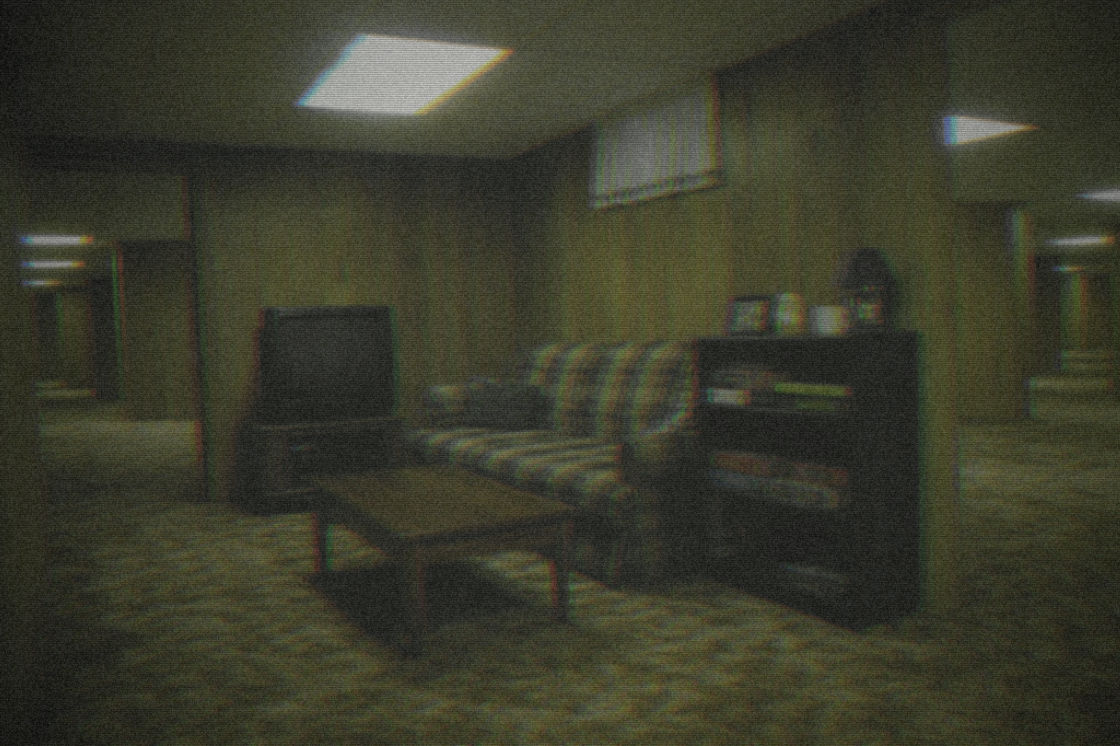
These before/after images are real examples from our own engine, not customer photos.
why the basement was always halfway there
Most rooms have to be emptied to feel liminal. The basement does not. It starts the job for you. It is the part of the house that touches the dirt, sealed off from the living floors above by a door at the top of the stairs and a smell that is part damp concrete, part old paint, part the cardboard slowly giving up. Nobody sleeps down there. Nobody lingers. You went down for a reason and you came back up when the reason was done.
So when you see it stripped bare in the backrooms aesthetic, the change is smaller than you expect, and that is what makes it land. The furnace and the water heater are gone, but you can still hear them in the silence. The boxes that held the family's past are gone, but the shelves remember their shapes. It does not feel invented. It feels like the basement on a night you had to go down alone.
what the rebuild leans into
the low ceiling and the joists
A basement is the only room where the ceiling feels close enough to touch, where the floor of the house above is right there as bare joists, ductwork, and a run of wiring. The generator reads that compression from your photos and keeps it. The rebuilt room presses down the same way the real one did, the height that made you duck a little even when you did not have to.
the one bare bulb
Basements are rarely lit well. There is the single pull-chain bulb, or the one fluorescent tube that took a second to flicker on and then buzzed. Either way the light pools and fails, and the corners stay dark. That falloff is half of the dread, and the rebuild preserves where your photos' light comes from and where it gives up, so the shadows land where your room actually kept them.
paneling, concrete, and the stairs down
Some basements are finished in cheap wood paneling that stops partway up. Some are bare poured concrete with a painted floor and a drain in the middle. The surfaces carry into the rebuild as texture, not as something to be smoothed flat. And if your photos catch the stairs, the rebuild keeps that descent: the way the steps fall away into the dark below the last light, the single most liminal thing a basement owns.
how to do it: four steps
- Take or find your photos. You need exactly 2, both people-free, of the same basement. A wide shot from the bottom of the stairs or a corner works best, catching the low ceiling, the joists, the paneling or concrete, and wherever the light comes from. Recent phone photos are fine; so are scanned old ones if the basement is long gone.
- Upload to liminals.space. No account needed. Your photos go straight to the generator and are deleted after processing. They are never stored, and no one else ever sees them.
- Pay once: $4.99. Look over the examples first, then a single flat payment ($4.99 one-time, handled by Polar) sets the generation running. No subscription, nothing recurring.
- Get the full experience. We generate the rooms at full resolution, graded onto worn VHS tape, and deliver a downloadable keepsake: the complete set as images plus a PDF in a single zip.
2 photos · $4.99 · no account · your photos aren't saved.
other rooms worth rebuilding
The basement is the room you avoided; the rooms around it carry their own quiet weight.
frequently asked questions
- Why is a basement such a natural backrooms?
- A basement is already half a liminal space before anyone touches it. It sits between the house and the earth, half-underground, rarely lived in, lit by a single bare bulb or a buzzing tube. It is built for storage, not for staying. Empty it of the boxes and the furnace hum and it slides into the backrooms with almost no resistance, because your body already filed it under places you do not linger.
- What photos should I use for a backrooms basement?
- You upload exactly 2 photos, both people-free. Pick the two angles that carry the most: one wide shot from the bottom of the stairs or a corner, catching the low ceiling, the joists, the paneling or bare concrete, and one closer angle with the light source or the furnace wall. liminals.space reads anchors from your own photos, so the more of the real room they hold, the more the rebuild feels like the basement you actually remember being uneasy in.
- Do you keep my basement photos?
- No. Your photos go straight to the generator and are deleted after processing. There is no account, nothing is stored, and no one else ever sees them. You pay $4.99 once, we generate the rooms seen by no one but you, and you download them as a keepsake.
keep reading
What are the backrooms? · Why liminal spaces feel nostalgic · Examples · FAQ